See How Your Research Aligns
Create a free account to analyze your research alignment,
identify potential research gaps, and generate personalized
application documents for this professor.
Create Free Account
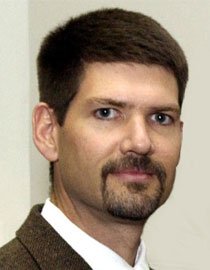
Thomas R. Ioerger
Intelligent Agents
Machine Learning
Bioinformatics
About
Thomas R. Ioerger, Ph.D. is a Professor of Computer Science & Engineering at Texas A&M University. He earned his Ph.D. in Computer Science from the University of Illinois at Urbana-Champaign in 1996, after completing his M.S. there and a B.S. in Molecular and Cell Biology at Penn State University. His research interests include artificial intelligence, machine learning, intelligent agents, and bioinformatics.
Research Performance Summary
1990-2025
Active Research Span
First Recorded Paper
Polymorphism at the self-incompatibility locus in Solanaceae predates speciation.
Year:
1990
Citations:
316
Venue:
Proceedings of the National Academy of Sciences 87 (24)
Latest Recorded Paper
Evaluating selection at intermediate scales within genes provides robust identification of genes under positive selection inM. tuberculosisclinical isolates
Year:
2025
Citations:
0
Venue:
bioRxiv, 2025.05. 07.652684
Last 10 Years Publication Activity
This timeline shows the professor's yearly publication activity.
Publication Venues and Collaboration
Journal, Conference, and Book Publication Breakdown
Top Coauthors
Ioerger
Sacchettini
Research Impact by Period
Papers
12
Citations
36
Avg. Citations / Paper
3
H-Index
4
Papers
56
Citations
994
Avg. Citations / Paper
17.8
H-Index
17
Papers
83
Citations
5106
Avg. Citations / Paper
61.5
H-Index
37
Papers
38
Citations
5552
Avg. Citations / Paper
146.1
H-Index
28
Papers
37
Citations
1418
Avg. Citations / Paper
38.3
H-Index
12
Papers
54
Citations
8071
Avg. Citations / Paper
149.5
H-Index
23
Papers
14
Citations
541
Avg. Citations / Paper
38.6
H-Index
9
Papers
11
Citations
935
Avg. Citations / Paper
85
H-Index
5
Contact and Professional Links
Detected Research Keywords
Electron Density Maps
Tuberculosis Malate Synthase
Inhibitors Mycobacterium Tuberculosis
Structure Activity Relationships
Protein Model Building
Chemical Genetic Interaction
Predicate Transition Nets
Density Maps Pattern
Genome Wide Association
Natural Brominated Phenoxyphenols