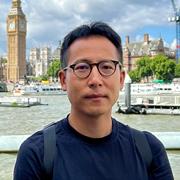
Ke Li
About
Scientists across the natural sciences and engineering increasingly rely on data-driven approaches to assist in critical decision-making during their discoveries. The search for a new scientific discovery can frequently be cast as a multi-objective optimisation problem that involves balancing many conflicting requirements within a vast, structured design space. For example, a biochemist seeking new therapeutics might aim to optimise the efficacy, synthesisability, and drug-likeness of compounds whilst minimising off-target effects and toxicity. Similarly, a clinician might optimise a treatment plan that maximises patient survival rates whilst minimising side effects and costs. Qualities like synthesisability are difficult to estimate in advance and require resource-intensive experimentations to measure, making these optimisation problems ‘black-box’ and particularly challenging. Substantial efforts have been made in developing black-box search algorithms (e.g., evolutionary methods, Bayesian optimisation), and employing recent large language models (LLMs) to optimise a wide range of black-box functions. All of them can be regarded as intelligent agents in multi-objective optimisation. My research has contributed to the fundamental development of computational/artificial intelligence (CI/AI) for such black-box multi-objective optimisation and decision-making problems, as well as their applications across diverse domains, such as biology, software engineering, healthcare, renewable energy etc. I have published over 150 papers in top-tier CI and AI domains. These include >41 papers in prestigious IEEE/ACM Transactions and >40 papers in top conferences across AI (e.g., NeurIPS, CVPR, AAAI, IJCAI), natural language processing (e.g., ACL, EMNLP), and software engineering (ICSE, FSE, ASE, ISSTA). My group has been well funded by a substantial and diverse research funding portfolio, the total accumulated programme is over £11.5 million (from UKRI, Royal Society, EPSRC, BBSRC, ERC, Amazon Science, Hong Kong RGC, EU Horizon, etc). In particular, my research has been well recognized and supported by several UK's highly prestigious and competitive Fellowships, including UKRI Future Leaders Fellowship (FLF, ~£2.1million in total, 2019-2027, #MR/X011135/1; MR/S017062/1), two Alan Turing Institute Fellowships (2021-2023, 2024-2026), Royal Society Kan Tong Po Fellowship (KTPF, £3K, 2023-2025, #KTP/R1/231017), and, most recently, Royal Society Faraday Discovery Fellowship (FDF, ~£8million in total where my share is ~2.5million as the Co-PI, 2025-2035, #FDF/S2/251014). I have been ranked in Stanford’s list of the World’s Top 2% Scientists since 2020. I have regularly served mainstream conferences in computational intelligence such as General Co-Chair of EMO 2027, Program Chair of IEEE CEC 2027 etc. Meanwhile, I have been Area Chair of top-tier AI conferences, e.g., AAAI, NeurIPS, and ACL. I have been in the Editorial Board of 6 academic journals including IEEE Transactions on Evolutionary Computation (IF=11.7, JCR Q1, ranked 2 of 110 in CS, Theory & Methods; 5 of 139 in CS and AI), Evolutionary Computation (IF=4.6, JCR Q1) Complex & Intelligent Systems (IF=5.0, JCR Q1), Journal of Machine Learning & Cybernetics (IF=3.1), Mathematics (IF=2.3, JCR Q1), Frontiers in Human Neuroscience (IF=2.4), and Advances in Computational Intelligence. Further, I have co-organised two special issues in Multimedia Tools Applications (IF=3.0) and Neurocomputing (IF=5.5, JCR Q1) journals. I have served as a grant reviewer nationally including UKRI FLF (2020–2025, sift panel observer since 2023), EPSRC NIA and Responsive Mode Grant (since 2023), Royal Society International Exchange panel (2025-2027), UKRI Cross Research Council Responsive Mode (2025) and EPSRC AI Hubs for Real Data interview panel (2023), UKRI Development Networks Plus Fund (2020–2022), Leverhulme Trust (2018, 2019, 2023, 2024). Further, I have served as grant reviewer internationally including Czech Science Foundation (2020), DAAD in Germany (2020), ANR in France (2022, 2023), Hong Kong RGC (2022–2025), NSERC (2025), and NSFC (2021–2025).
Research Performance Summary
First Recorded Paper
一种改进的基于差分进化的多目标进化算法
Year: 2008
Citations: 6
Venue: 计算机工程与应用 44 (29)
Latest Recorded Paper
RIDER: 3D RNA Inverse Design with Reinforcement Learning-Guided Diffusion
Year: 2026
Citations: 0
Venue: ICLR 2026: Proceedings of the 14th International Conference on Learning
Last 10 Years Publication Activity
This timeline shows the professor's yearly publication activity.