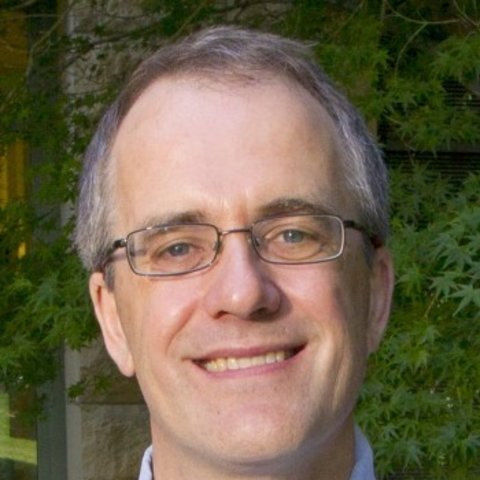
Christopher Manning
About
Christopher Manning is the inaugural Thomas M. Siebel Professor in Machine Learning in the Departments of Linguistics and Computer Science at Stanford University, Director of the Stanford Artificial Intelligence Laboratory (SAIL), and an Associate Director of the Stanford Institute for Human-Centered Artificial Intelligence (HAI). From 2010, Manning pioneered Natural Language Understanding and Inference using Deep Learning, with impactful research on sentiment analysis, paraphrase detection, the GloVe model of word vectors, attention, neural machine translation, question answering, self-supervised model pre-training, tree-recursive neural networks, machine reasoning, dependency parsing, and summarization, work for which he has received two ACL Test of Time Awards and the IEEE John von Neumann Medal (2024). He earlier led the development of empirical, probabilistic approaches to NLP, computational linguistics, and language understanding, defining and building theories and systems for Natural Language Inference, syntactic parsing, machine translation, and multilingual language processing, work for which he won ACL, Coling, EMNLP, and CHI Best Paper Awards. In NLP education, Manning coauthored foundational textbooks on statistical approaches to NLP (Manning and Schütze 1999) and information retrieval (Manning, Raghavan, and Schütze, 2008), and his online CS224N Natural Language Processing with Deep Learning course videos have been watched by hundreds of thousands. In linguistics, Manning is a principal developer of Stanford Dependencies and Universal Dependencies, and has authored monographs on ergativity and complex predicates. He is the founder of the Stanford NLP group (@stanfordnlp) and was an early proponent of open source software in NLP with Stanford CoreNLP and Stanza. He is an ACM Fellow, a AAAI Fellow, and an ACL Fellow, and a Past President of the ACL (2015). Manning has a B.A. (Hons) from The Australian National University, a Ph.D. from Stanford in 1994, and an Honorary Doctorate from U. Amsterdam in 2023. He held faculty positions at Carnegie Mellon University and the University of Sydney before returning to Stanford.
Research Performance Summary
First Recorded Paper
Lexical Conceptual Structure and Marathi
Year: 1991
Citations: 1
Venue: Ms., Stanford University
Latest Recorded Paper
Universal Dependencies for Sindhi
Year: 2025
Citations: 0
Venue: Proceedings of the Eighth Workshop on Universal Dependencies (UDW
Last 10 Years Publication Activity
This timeline shows the professor's yearly publication activity.