See How Your Research Aligns
Create a free account to analyze your research alignment,
identify potential research gaps, and generate personalized
application documents for this professor.
Create Free Account
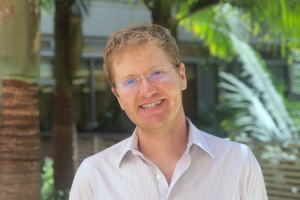
Alexander Sherstov
Computational Complexity Theory
Computational Learning Theory
Quantum Computing
About
I am a professor at UCLA, in the Department of Computer Science. My area of specialization is theoretical computer science. I am particularly interested in computational complexity theory, computational learning theory, and quantum computing. Prior to joining UCLA, I was a postdoctoral researcher at Microsoft Research New England (2009–2011). I completed my Ph.D. in computer science at the University of Texas at Austin in 2009, under the direction of Adam Klivans.
Research Performance Summary
2002-2024
Active Research Span
First Recorded Paper
Using Java to design and test hardware circuits over a classroom network
Year:
2002
Citations:
3
Venue:
Proceedings of the 33rd SIGCSE technical symposium on Computer science
Latest Recorded Paper
The communication complexity of approximating matrix rank
Year:
2024
Citations:
3
Venue:
2024 IEEE 65th Annual Symposium on Foundations of Computer Science (FOCS
Last 10 Years Publication Activity
This timeline shows the professor's yearly publication activity.
Publication Venues and Collaboration
Journal, Conference, and Book Publication Breakdown
Top Coauthors
Sherstov
Stone
Klivans
Research Impact by Period
Papers
7
Citations
65
Avg. Citations / Paper
9.3
H-Index
4
Papers
9
Citations
164
Avg. Citations / Paper
18.2
H-Index
7
Papers
15
Citations
1031
Avg. Citations / Paper
68.7
H-Index
15
Papers
16
Citations
910
Avg. Citations / Paper
56.9
H-Index
11
Papers
5
Citations
118
Avg. Citations / Paper
23.6
H-Index
3
Contact and Professional Links
Detected Research Keywords
Learning Intersections Halfspaces
Communication Query Complexity
Automated Stock Trading
Intersection Two Halfspaces
Multiparty Communication Complexity
Communication Lower Bounds
Lower Bounds Learning
Bounds Learning Intersections
Constant Depth Circuits